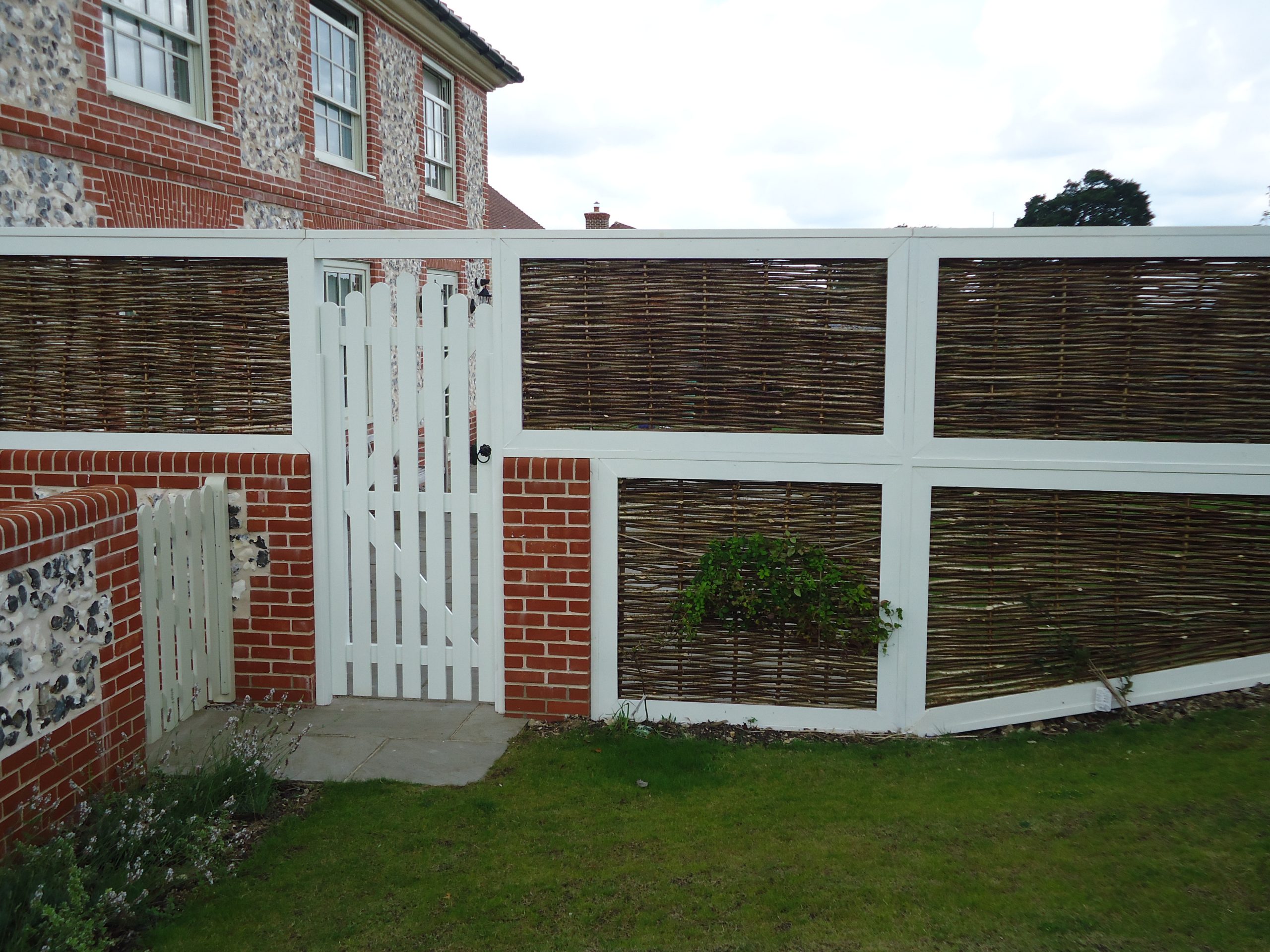
I was commissioned to supply and erect a fence across this garden as a screen to shield the owners from public view, whilst at the same time, provide them with a different style of fence, one that would complement the natural building materials used in the house construction.
The site was prone to high winds, and therefore I did not want to erect a solid panel fence of any description. I wanted something modern yet traditional. Something bespoke to reflect the quality of the house (million pound plus) that would provide screening, under windy conditions, look expensive, exclusive and be affordable.
I showed the customer some photographs of willow and hazel hurdles and other projects including a woven willow sided timber bridge I had designed for Chelsea (Alfred McAlpine garden – Silver Gilt) which they loved the look of. How to produce a woven hazel/chestnut or willow screen that passed all of the criteria. Something bespoke to the actual site, bearing in mind the sloping nature of the ground (which precluded refabricated panels). That was the challenge!
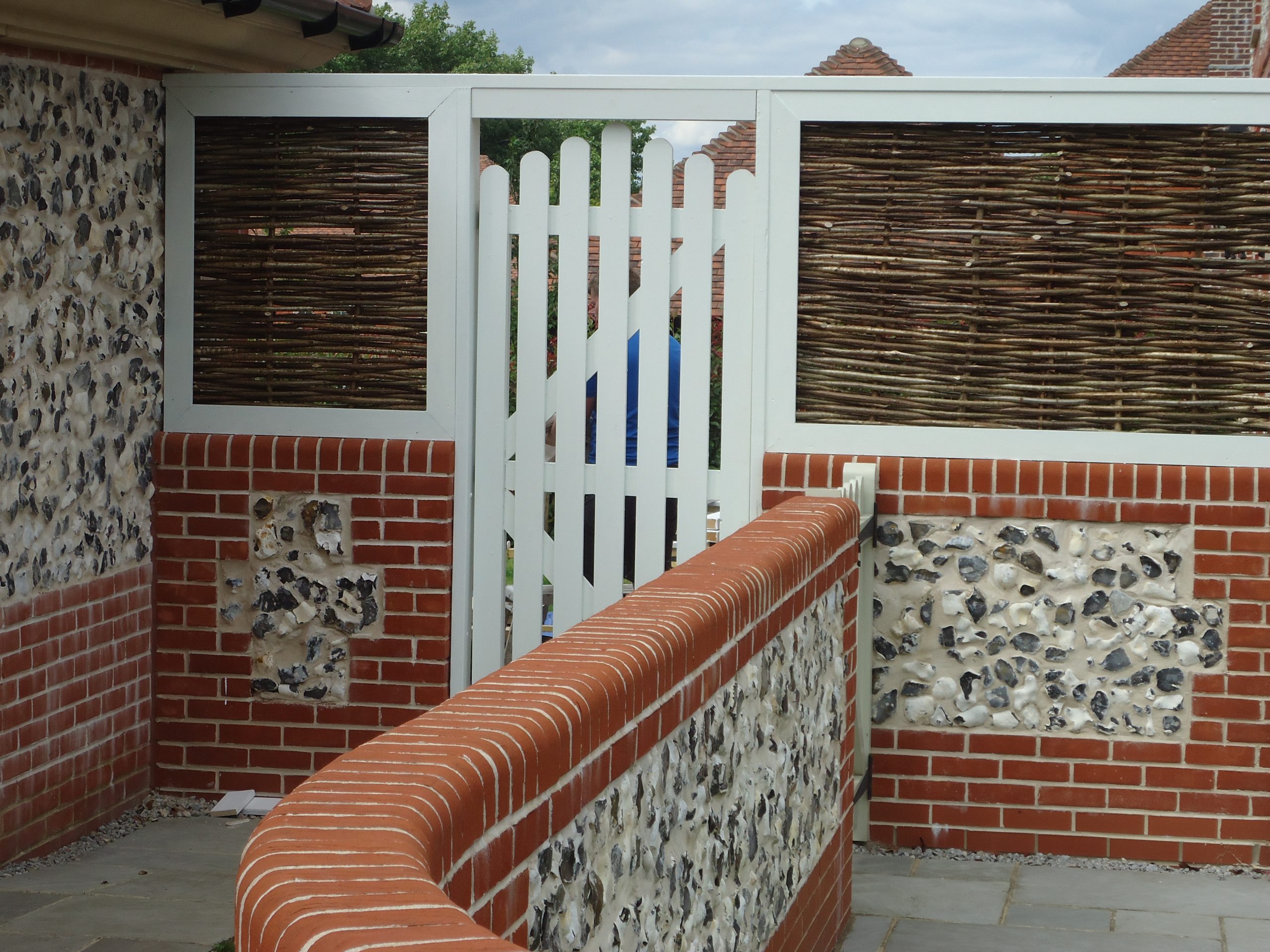
The two low panels of brickwork and flint were already on site, with a low picket style gate between the pair.
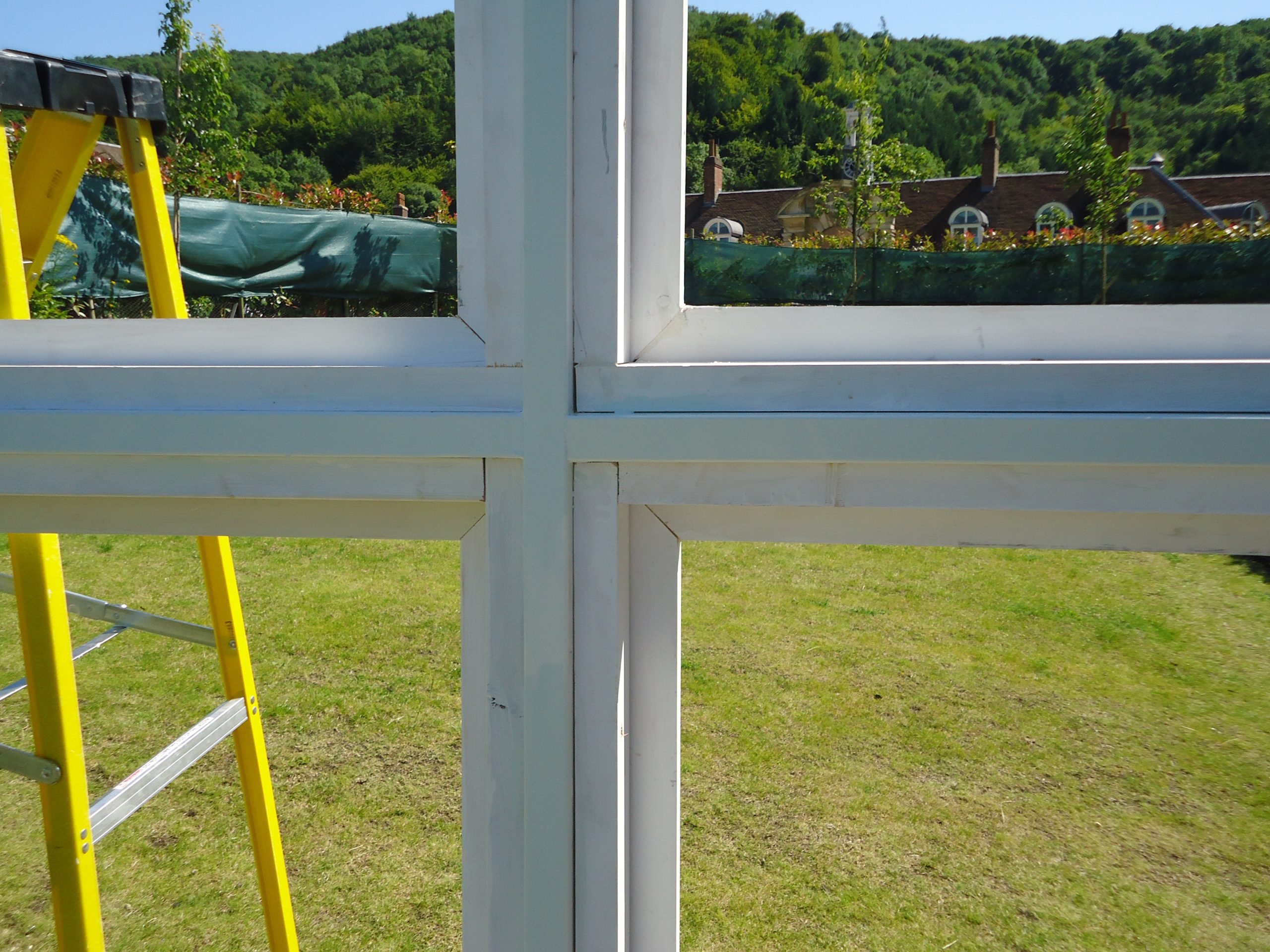
I designed a series of timber frames, all connected as one length, comprising 100mm x 100mm upright posts, with 150mm x 50mm and 75mm x 75mm internal timbers as shown in the photographs.
The capping was made from 50mm x 200mm timber (all timber was planed and prepared, tanalised and heavily impregnated with clear preservatives and double coated in primer before construction) Non-ferrous screws were used throughout.
One side of the fence was completed using 25mm x 100mm frames, much like a picture frame, and the woven hazel panels, each designed, shaped and measured to fit into the frame were screwed into position. I selected woven panels as they are not easily affected by high winds, the air passing freely through the gaps. (On hot days, the air is cooled by travelling through the gaps in the roundels)
Once the woven panels were secured, the second section of the picture frame was added and screwed into position, securely retaining the screen, again, much like a picture in a frame.
The woven panels will last for around six or seven years provided that they are treated with clear preservative on an annual basis. This treatment was clearly underlined in the quotation. Failure to treat the woven panels would reduce their lifespan.
I manufactured the higher gate using the same grade of timber, retaining the picket fence appearance to reflect the fact that the house was in the middle of the countryside and not in the middle of the city. The cost? Around £6,000.00 inc VAT for the work shown.