

This paving project turned into a nightmare for the builder.
The kitchen/dining area in the house had been fitted out with slate, laid with very tight joints and sealed. The owners decided they wanted to extend the visual area of paving into the garden by means of a patio, using the same sized slabs of slate.
Unfortunately, they would not accept that the joints would have to be at 8 – 10mm instead for the external works, insisting the laying pattern match the interior grid. Of course, leaving wider joints to the patio would have caused the pattern to be lost, as each slab increased the misalignment further as the patio was widened, and they insisted that the exterior pattern should match.
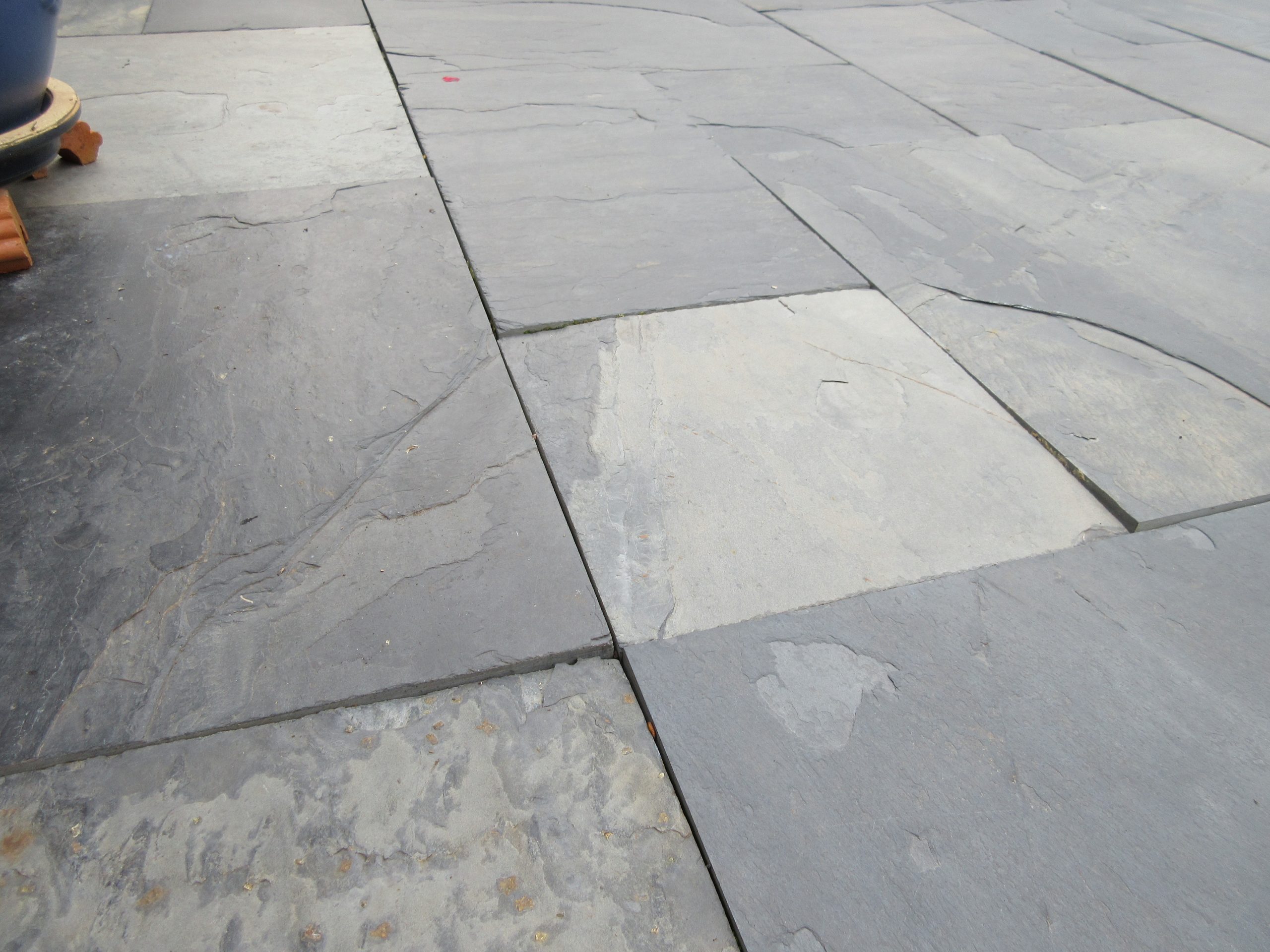
The result was a disaster. Because the pointing joints were too narrow, and the slabs were not sealed, the builder compounded the project failure by laying on a sand and cement bed, with no bonding agent. To make matters worse, they did not spread a 100% full bed, which resulted in a large percentage of the slabs from breaking free from their laying beds.
Because the slabs were not effectively pointed, rainwater could get into the joints and remain under the slabs, trapped in the voids in the laying bed, which resulted in even more damage during frosty weather, when the ice expanded and simply lifted the slabs free from their base.
Because of the nature of the slabs – being slate, which is a natural material, riven or split from the bed in the quarry and sawn to shape on four sides, the tiles have a tendency to split when laid, and the whole patio became a series of trip hazards, where slates, having split into two (or simply delaminated in large flakes) left the area covered in loose, flaking and uneven slabs. There are many lessons to be learned from this project!